
 hulnegy@gmail.com
 Github
 Google Scholar
📖 About Me
I am an undergraduate student at Dongbei University of Finance and Economics, expecting to graduate with a Bachelor of Science in Data Science and Big Data Technology in Fall 2026. During this period, I serve as a research assistant to Zhaonan Wang at New York University.
I am passionate about all forms of computer technology 💻✨. I have compiled Android 6.0 system source code from scratch 🤖 and maintain a personal NAS server with 80TB of storage capacity 💾🏠.
📜 Publications
My research focuses on spatiotemporal modeling and its applications across domains. Spatiotemporal modeling is an emerging topic that has gained widespread attention since 2019. It aims to learn the state of complex systems for downstream tasks, capturing how these states evolve over time and how they change under different conditions. This direction has broad real world impact, from modeling spatiotemporal dynamics in smart cities as part of computational social science to modeling financial markets as a core component of fintech. I work with outstanding collaborators to advance this line of research.
Real-world Spatiotemporal Modeling Methods (Mainly Focused)
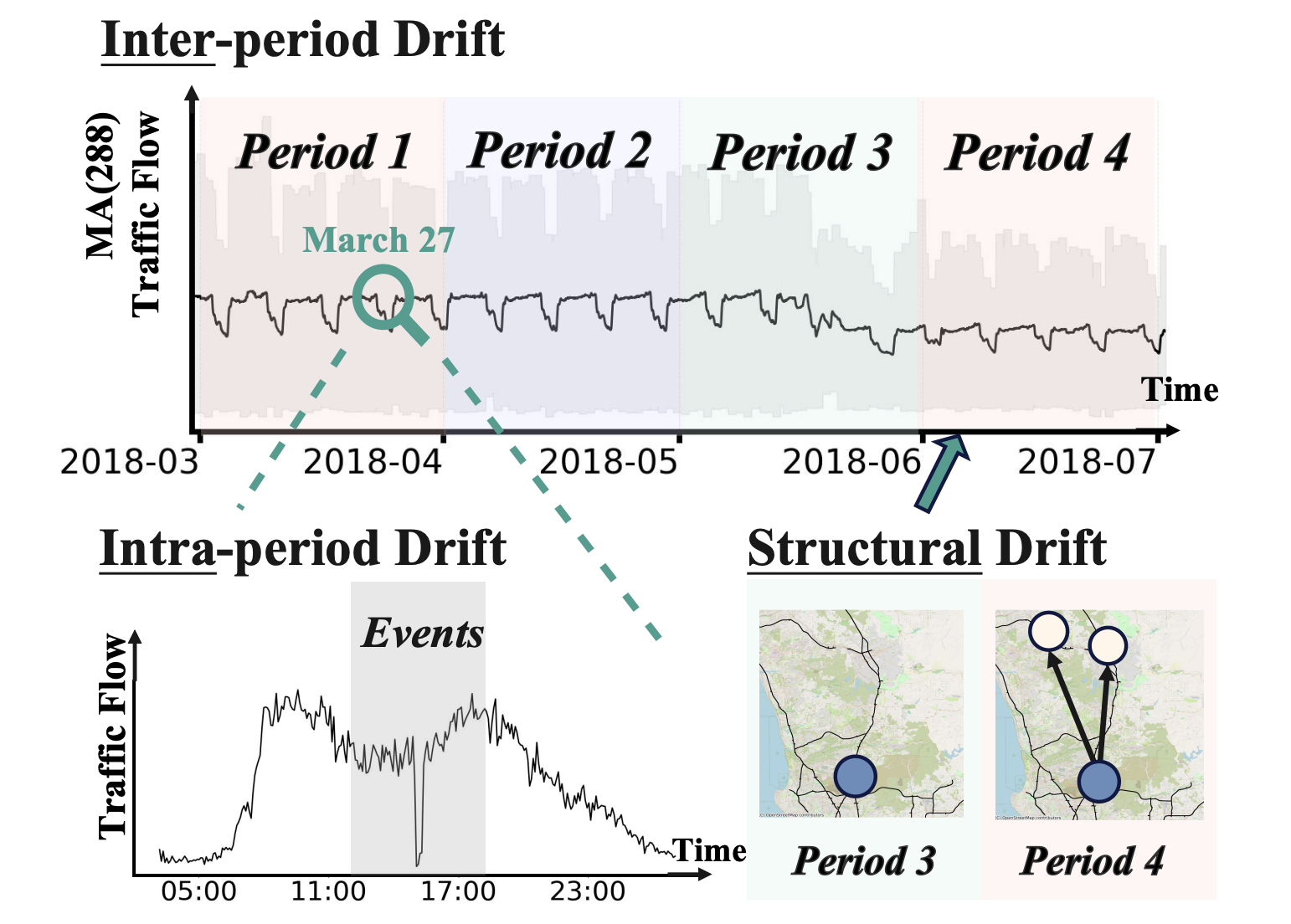
EMMA: A Plug-and-Replay Framework for Continual Traffic Forecasting under Compound Drift
To forecast the future, spatiotemporal predictors are often updated at specific intervals. However, various events occurring between these updates can cause the predictors to fail. This paper formalizes this phenomenon from a decomposition perspective based on the joint density of concept drift and proposes an effective solution.
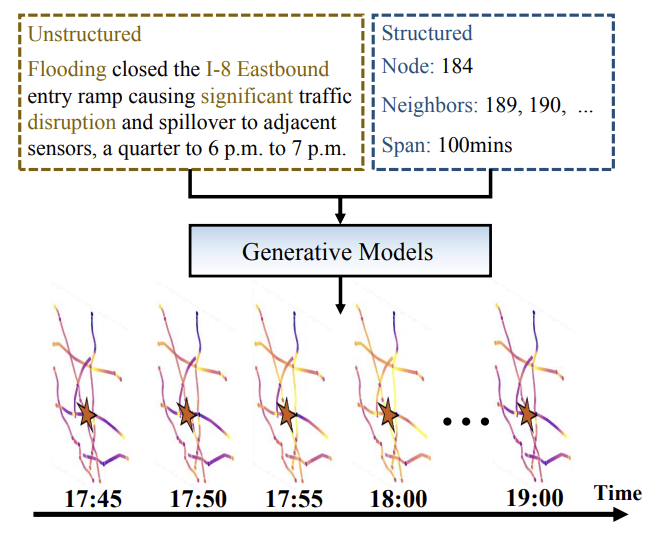
Net-Ev$^2$: A Generative Simulator for Network Event Evolution
One measure of understanding the real world is the ability to simulate its evolution under given conditions, which becomes significantly more challenging in network-level spatiotemporal systems. This work proposes a benchmark for conditional future generation and a metric for network structural fidelity. Finally, we design a novel diffusion operator to achieve high-fidelity generation of network dynamics.
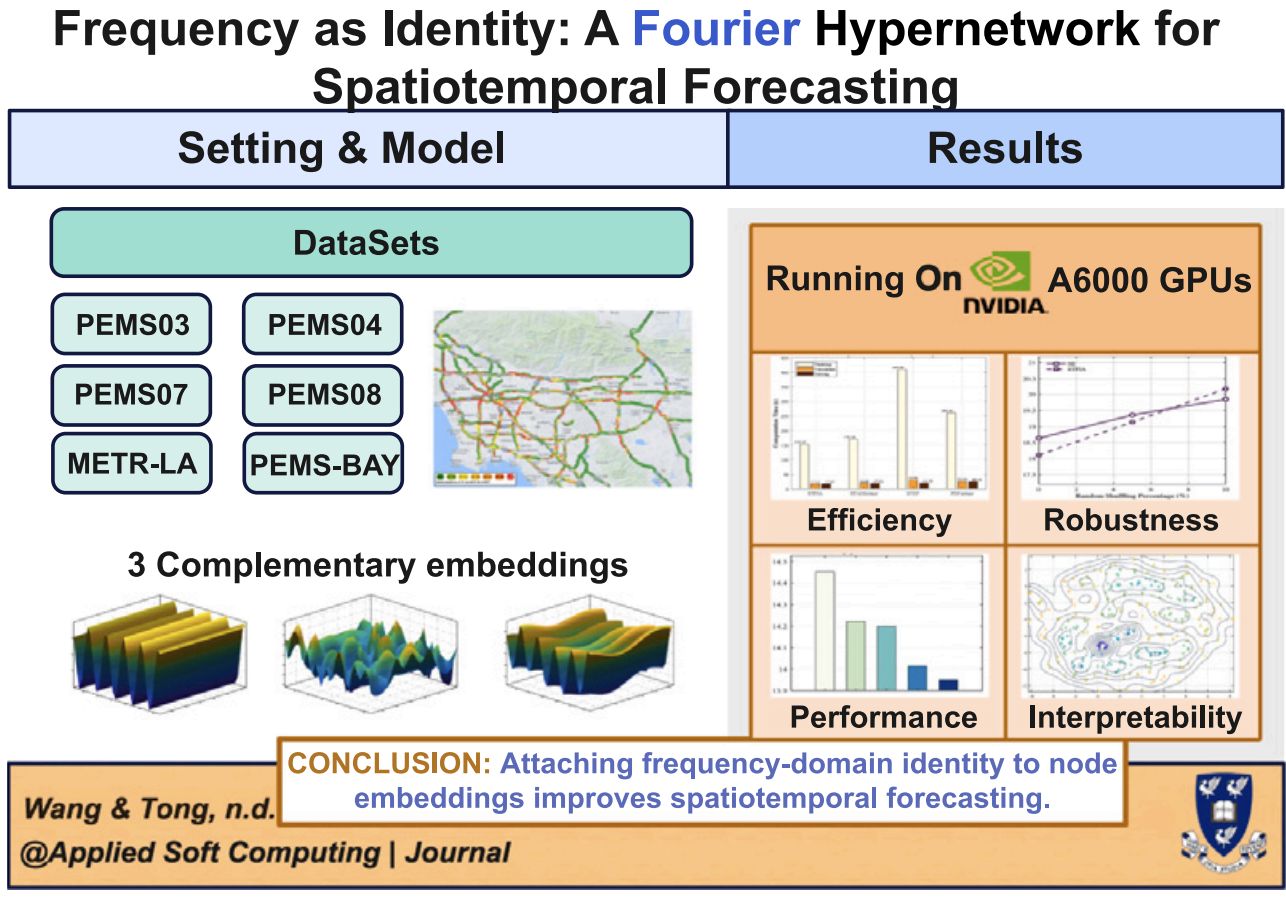
Frequency as identity: A Fourier hypernetwork for spatiotemporal forecasting
Embedding-based methods have demonstrated stronger potential than GNNs, particularly in spatiotemporal forecasting. Inspired by STAEformer, this work designs a frequency-domain embedding generation approach that surpasses previous state-of-the-art methods. Notably, while STAEformer originated from a lab where my current supervisor previously worked and involved close collaboration, I had not yet met my supervisor when this research was conducted.
Applications in Smart Cities and FinTech (In collaboration with outstanding researchers)
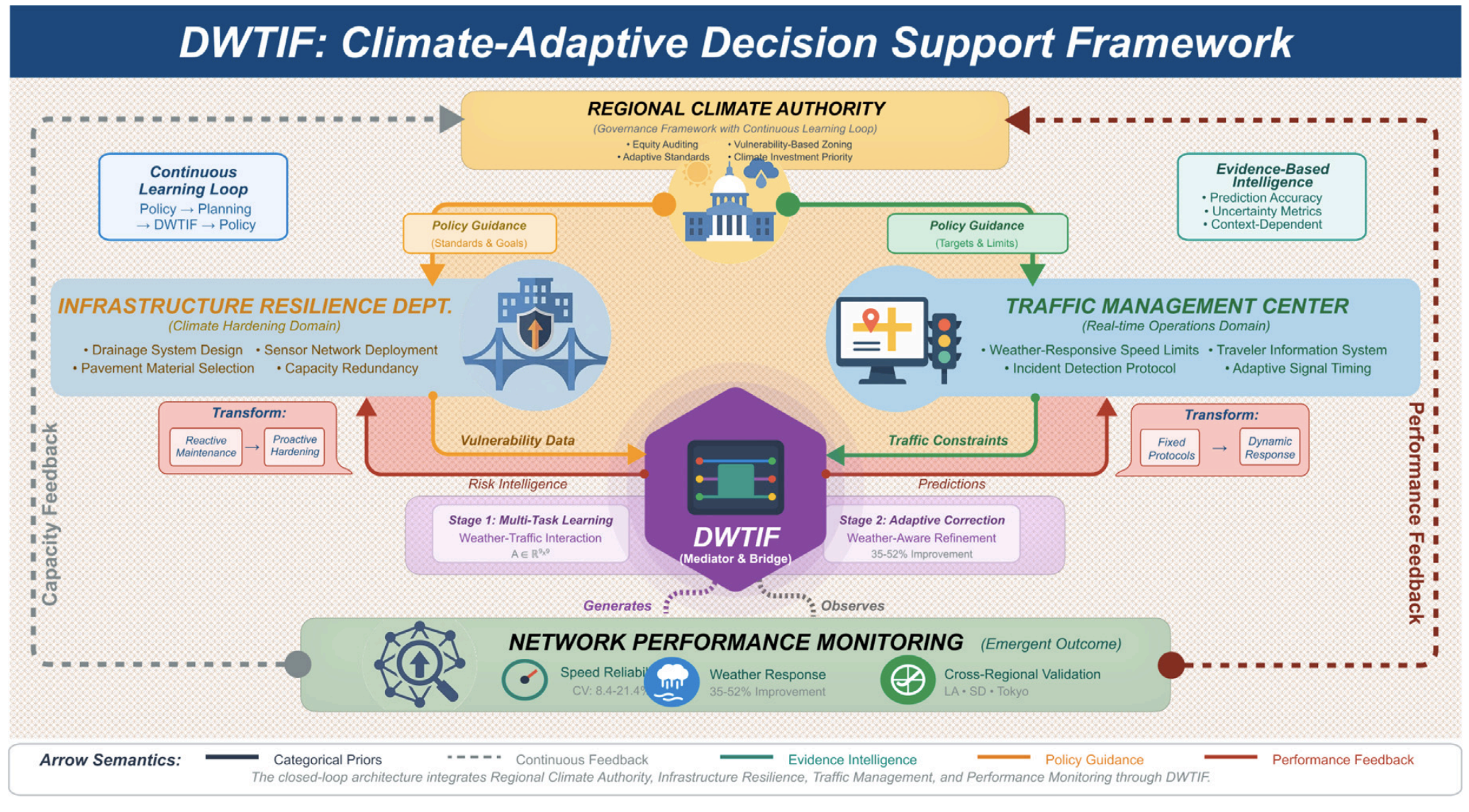
Climate-adaptive transportation infrastructure: Cross-regional solutions for urban resilience and emergency response
AI infrastructure is the next frontier for scaling intelligence beyond large scale pretraining. While strong researchers are not always strong engineers, our focus is on urban infrastructure, which is often overlooked compared to AI despite its vulnerability to extreme weather. A robust spatiotemporal system should be able to quantify these impacts.
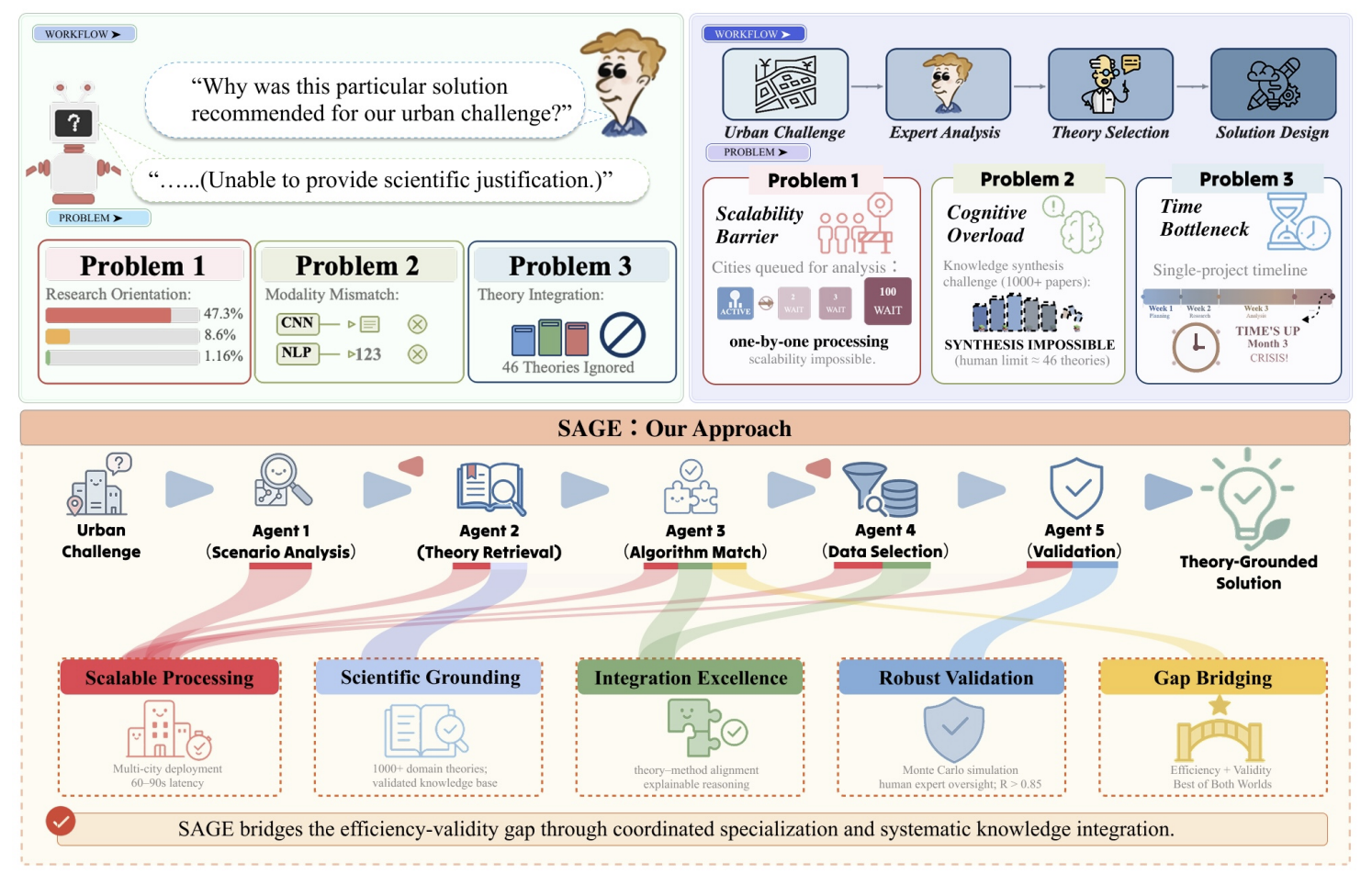
SAGE: A Theory-Informed LLM-Based Multi-Agent Recommendation System for Grounded AI Solutions Across Domains
This is the conference version of our paper subsequently submitted to npj Urban Sustainability. The motivation stems from a research philosophy in applied fields: a high-quality application paper should be scenario-driven rather than technology-driven. We validated this through an extensive literature review and developed a multi-agent system to automatically recommend the most suitable methods based on the specific scenario. A demonstration video is available here.
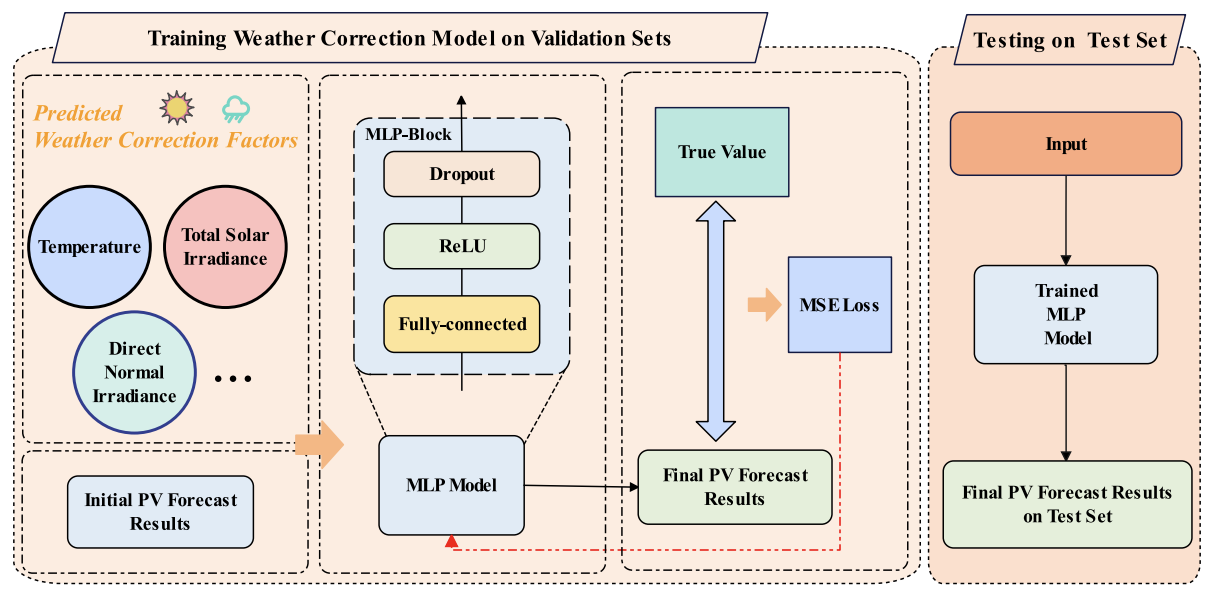
Enhancing PV power forecasting accuracy through nonlinear weather correction
In urban power generation systems, solar PV output is directly tied to weather conditions, making weather a valuable auxiliary variable. We design a multi-task learning (MTL) framework to incorporate weather information. This paper was selected as the cover article of the corresponding issue of Applied Energy and received 20 citations within one year.
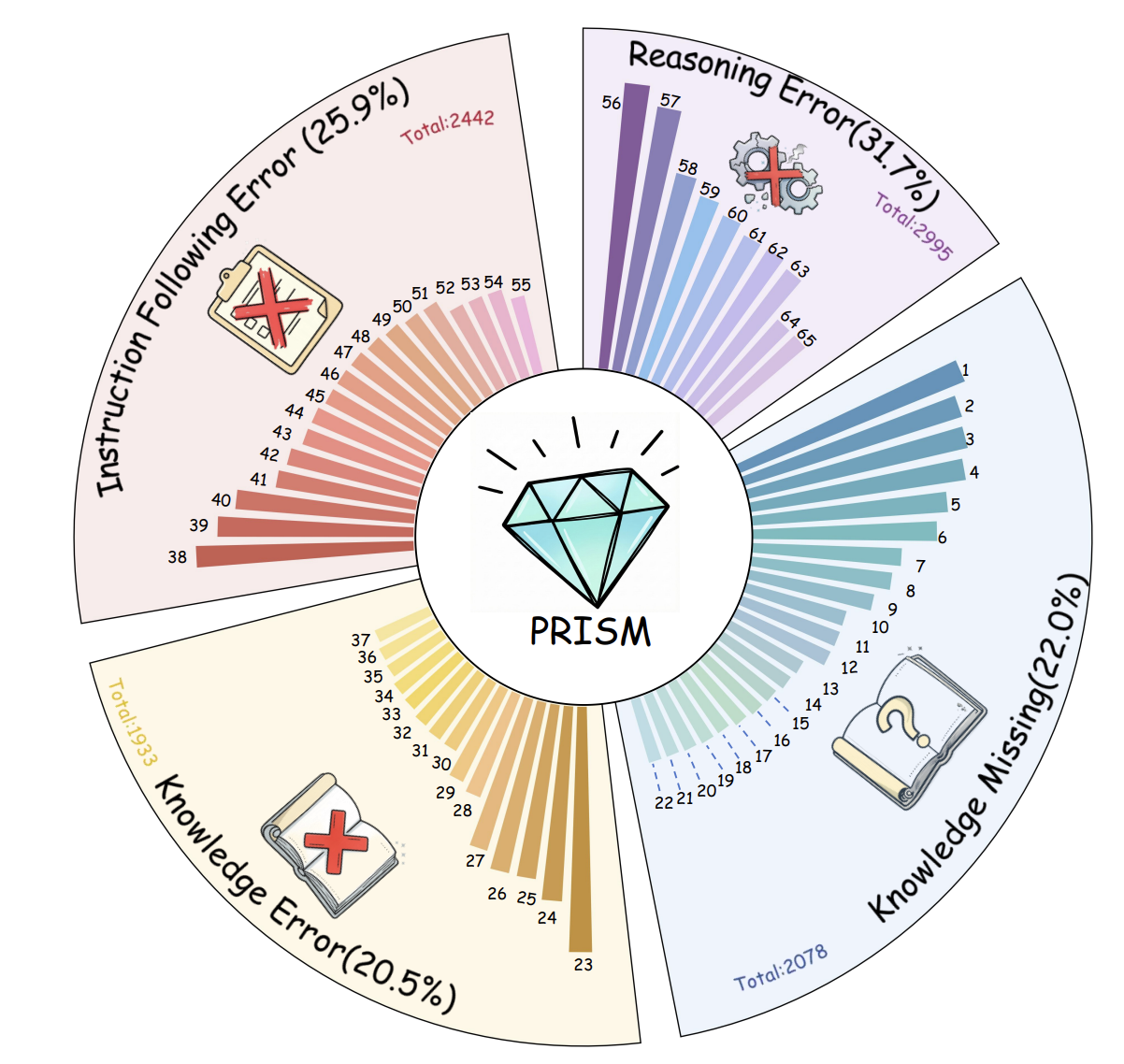
PRISM: Probing Reasoning, Instruction, and Source Memory in LLM Hallucinations
Shifting the lens to the recent success of GenAI, hallucination mitigation has been a long-standing topic. ICLR 2026 reportedly rejects papers that cite hallucination literature. While the existence of hallucinations is well known, why they occur remains poorly understood, and more critically, comprehensive benchmarks are lacking. In this work, we design four sub-tasks (KE, KM, RE, and IFE), each targeting a distinct hallucination mechanism, enabling a thorough understanding of LLM hallucinations.
🤝 Potential Collaboration
If you are also looking for potential collaboration opportunities, feel free to reach out. I enjoy exploring future possibilities with collaborators across different fields and have had many positive collaboration experiences — see the Applications in Smart Cities and FinTech (In collaboration with outstanding researchers) section above. Click this card to send me an email directly.